
IBC Washing for Chemical, Food & Pharmaceutical Industries
Intermediate Bulk Containers (IBCs) are critical to material handling across chemical, food, and pharmaceutical industries, where hygiene, traceability, and repeatable cleaning performance are non-negotiable. As reuse and reconditioning become standard, automated IBC washing systems are essential to maintain compliance, reduce operational risk, and control cleaning costs.
In food and pharmaceutical environments, IBC washing must align with hygienic design principles and deliver consistent, repeatable wash results. Residues such as syrups, creams, powders, flavourings, and active ingredients must be reliably removed to minimise cross-contamination and support internal quality systems aligned with guidance from bodies such as the MHRA, EMA, FDA, and EHEDG.
Chemical processors face equally demanding requirements, often dealing with viscous liquids, resins, additives, and oils. Automated IBC washing eliminates manual cleaning, improves operator safety, and ensures containers are cleaned consistently before reuse or onward transport, supporting best practice outlined by the UK Health & Safety Executive (HSE).
How Automated IBC Washing Systems Work
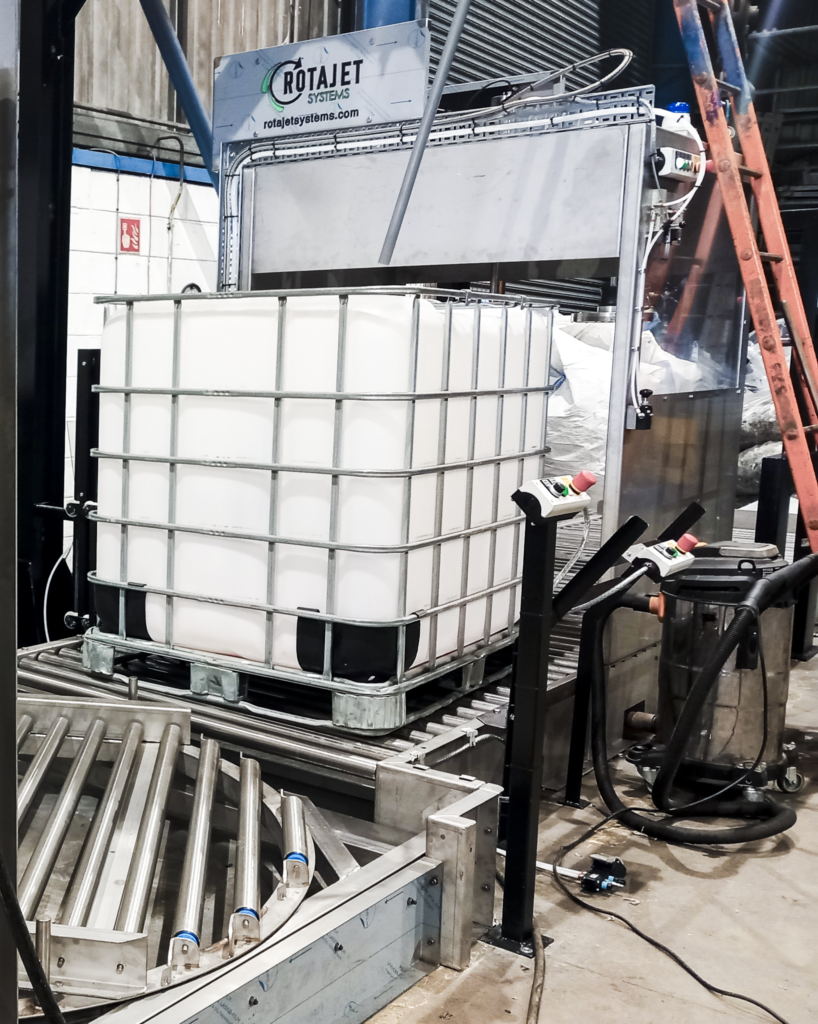
Modern IBC washing systems use controlled high-pressure spray technology to clean the internal bottle, valve, and base area, combined with external container washing to remove surface contamination. Wash cycles can be configured to include heated water, detergent dosing, and multi-stage rinsing to suit different residues and cleanliness requirements. This approach delivers repeatable results across high container volumes while supporting container reuse and reconditioning.
A proven solution for these applications is the IBC washing range supplied by Rotajet Systems Ltd. Manufactured in the UK, Rotajet IBC washers are engineered for regulated industrial use and offer high-pressure internal washing, external container cleaning, optional closed-loop water reuse to reduce water consumption and effluent discharge. Systems can be configured as single or multi-stage processes and supplied for purchase or rental, allowing businesses to scale capacity with confidence.
As cleanliness expectations and sustainability targets continue to rise, investing in a purpose-built IBC washing system is a critical step in improving compliance, extending container life, and future-proofing chemical, food, and pharmaceutical operations.
Regulatory & Industry References
Cleaning and reuse of IBCs in regulated environments should align with recognised health, safety, and hygiene guidance. The following organisations provide widely referenced frameworks relevant to chemical, food, and pharmaceutical container cleaning operations:
- UK Health & Safety Executive (HSE) – https://www.hse.gov.uk
- Medicines and Healthcare products Regulatory Agency (MHRA) – https://www.gov.uk/government/organisations/medicines-and-healthcare-products-regulatory-agency
- European Medicines Agency (EMA) – https://www.ema.europa.eu
- U.S. Food & Drug Administration (FDA) – https://www.fda.gov
- EHEDG – European Hygienic Engineering & Design Group – https://www.ehedg.org
Frequently Asked Questions
What is an IBC washing system used for?
An IBC washing system cleans Intermediate Bulk Containers after use so they can be safely reused, reconditioned, or returned to service. Automated washing improves consistency, reduces labour, and lowers contamination risk.
Which industries typically require IBC washing equipment?
IBC washing systems are widely used in chemical processing, food and beverage manufacturing, pharmaceuticals, cosmetics, and other regulated industrial sectors.
What residues can be removed from IBCs?
IBC washers can remove viscous liquids, syrups, creams, powders, oils, flavourings, additives, and many industrial process residues, depending on wash configuration and chemistry.
Can IBC washing systems reduce water consumption?
Yes. Many systems can be configured with filtration and water recirculation to reduce fresh water usage and minimise effluent volumes, supporting more sustainable operations.
How do you select the right IBC washer?
Selection depends on residue type, throughput, required cleanliness level, available utilities, and effluent handling. Providing this information allows the wash process to be correctly matched to the application.
Visit Drumwashing.com to find out more or get in contact with us.

