

The Complete Industrial Guide for Pharma, Food & High-Purity Manufacturing
In pharmaceutical, food, and high-value manufacturing industries, IBC cleaning is not just a task — it is a critical control point in your process.
Stainless steel Intermediate Bulk Containers (IBCs) are used to transport powders, liquids, and sensitive materials. Without validated, repeatable cleaning, they become a major contamination risk.
This is where Rotajet stainless steel IBC washing systems deliver a clear advantage — engineered, high-performance solutions built for industrial environments.
Speak to an engineer about your application
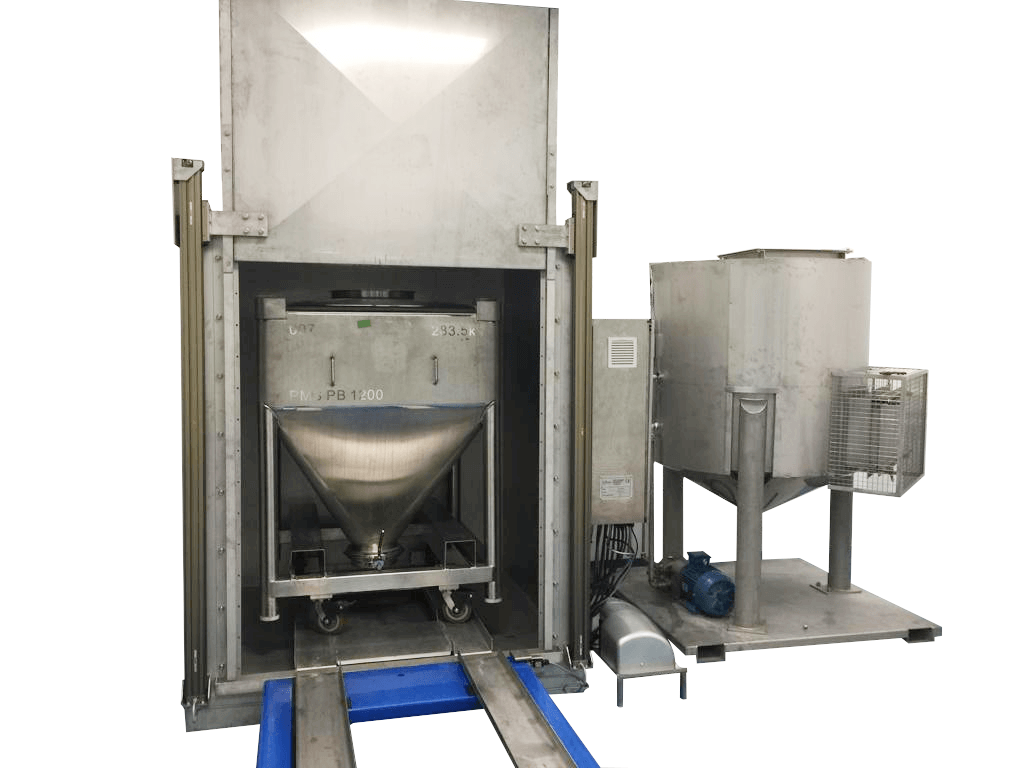
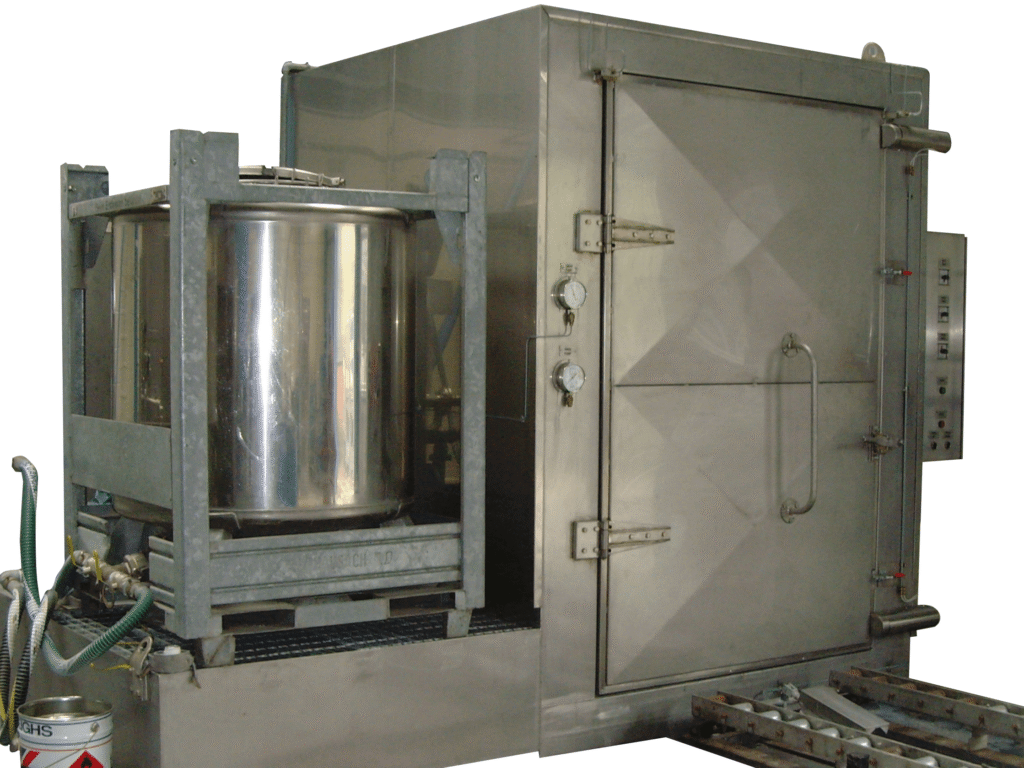
Why Stainless Steel IBC Cleaning Is Critical
Contamination leads to:
- Cross-contamination
- Product recalls
- Failed audits
- Allergen risks
- Downtime
Cleaning is process control — not maintenance.
Request a quotation based on your process
Why Most IBC Washing Systems Underperform
- Low pressure
- Poor internal coverage
- No automation
- No validation
Result: inconsistent cleaning
Rotajet systems eliminate these issues.
Send your IBC drawings for a layout
IBC Cleaning Technologies
| Technology | Performance | Limitation |
| Spray Ball | Low | Poor impact |
| Manual | Inconsistent | Labour heavy |
| Rotary Jet (Rotajet) | High | Engineered system required |
Rotary jet = industrial standard
Key Engineering Parameters
| Parameter | Range | Benefit |
| Pressure | 100–200 bar | Removes residue |
| Temp | Up to 80°C | Breaks oils |
| Cycle | 3–10 mins | Throughput |
| Water | 30–50L | Efficiency |
We optimise this for your process
System Configurations
Entry
- Standalone
Semi-Auto
- Internal + external
Fully Automated Rotajet
- Conveyor
- Wash
- Rinse
- Vacuum
- Dry
- Test
Request a layout design

How It Works
- Pre-rinse
- High-pressure wash
- Detergent
- Rinse
- Dry
- Validate
Trial this at Wakefield
Applications
- Food oils
- Pharma powders
- Adhesives
- Resins
Ask about your product

Buy, Rent or Outsource
- Buy
- Rent
- Contract
We’ll guide you
Performance Metrics
| Metric | Value |
| Cycle | 3–5 mins |
| Water | 30–50L |
| Pressure | Up to 200 bar |
Trials at Wakefield
- Test your IBC
- Validate cleaning
- Optimise system
Book a trial
Take Control of Your IBC Cleaning Process
IBC cleaning directly impacts quality, compliance, and cost.
Manual or basic systems introduce risk.
If it cannot be validated — it cannot be trusted.
Rotajet delivers:
- Repeatable cleaning
- Full coverage
- Process integration
This is process control, not cleaning.
Ready to Improve Your IBC Cleaning?
- Request quote
- Send layout
- Book trial
- Speak to engineer
FAQ’s
General
1. What is an IBC washer?
An automated system that cleans intermediate bulk containers using high-pressure water and controlled cycles.
2. How do IBC washers work?
They use rotating jets, detergents, rinsing, and drying stages to remove contamination.
3. What pressure is used?
Typically 100–200 bar depending on application.
4. How long is a cycle?
Usually 3–10 minutes.
5. How much water is used?
Around 30–50 litres per cycle.
6. Can oils be removed?
Yes, using heated detergents.
7. Are systems automated?
Yes, fully automated systems are available.
8. What industries use them?
Pharma, food, chemical, manufacturing.
9. Can systems be integrated?
Yes, into full production lines.
10. Why is validation important?
To ensure consistent, compliant cleaning.
Technical
11. What is TOC testing?
A method for measuring organic contamination.
12. What is swab testing?
Surface sampling to confirm cleanliness.
13. What chemicals are used?
Alkaline or neutral detergents.
14. Can IBCs be dried?
Yes, using air or heat.
15. What temperatures are used?
Up to around 80°C.
16. What is rotary jet cleaning?
High-impact rotating jets for deep cleaning.
17. What is spray ball cleaning?
Low-pressure cleaning method.
18. How is coverage ensured?
Through system design and validation.
19. What maintenance is required?
Routine servicing.
20. Are systems efficient?
Yes, designed for low water use.
Applications
21. Can powders be cleaned?
Yes.
22. Can adhesives be removed?
Yes.
23. Can resins be removed?
Yes.
24. Are systems cleanroom compatible?
Yes.
25. Can food residues be removed?
Yes.
26. Can allergens be removed?
Yes.
27. Can systems be customised?
Yes.
28. Can hazardous materials be cleaned?
Yes.
29. Are trials available?
Yes, at Rotajet.
30. Who benefits most?
Pharma, food, industrial.
Commercial
31. Why choose engineered systems?
For consistent performance.
32. What is closed-loop cleaning?
Water recycling system.
33. What is ROI?
Reduced cost and downtime.
34. Can systems be rented?
Yes.
35. Is outsourcing available?
Yes.
36. What lead times apply?
2–12 weeks.
37. Are systems UK made?
Yes.
38. Can layouts be provided?
Yes.
39. Do you offer trials?
Yes.
40. Why choose Rotajet?
Because Rotajet delivers complete engineered solutions.
Visit Drum Washing to learn more or to get in contact with us.

